
Hutchinson County Arrest Warrants Explained
An arrest warrant is an order signed by a judge or magistrate. It follows a complaint and a probable-cause review. Texas Code of Criminal Procedure Chapter 15 sets the statewide process. In Hutchinson County, the underlying case may sit in the 84th or 316th District Court, the constitutional County Court, a JP court, or a municipal court, depending on the charge. The HCSO county, JP1, and JP2 lists are public starting points. They are not the warrant instrument itself. The Odyssey case portal sits behind a login, so it offers no public sample of a current arrest warrant. Ask the clerk for the correct court and case route rather than assuming one list covers every level.
Hutchinson County Arrest Warrant Issuance
The Hutchinson County process starts with a complaint or affidavit. A magistrate reviews the stated facts. If the probable-cause requirement is met, the magistrate signs the order. The charge level then fixes the court file and the clerk route. The Texas Code of Criminal Procedure, Chapter 15 supplies the rules, and the county's 84th and 316th District Courts serve as the felony trial courts. This path differs from an FTA capias, which issues after a person misses a court duty. The case notice or the clerk can tell you which kind of process you face.
Inside a Hutchinson County Arrest Warrant
Treat this field inventory as a checklist of what to ask about. It is not a description of a public Hutchinson County result. The Odyssey portal offers no anonymous case search or instrument image. Use the case or citation identifier the issuing court printed, and ask the clerk what can be released.
| Instrument identifier | Cause numberUse the number supplied by the court; no local format was verified. |
|---|---|
| Charge / classification | The offense and case level explain which court holds the file. |
| Issuing authority | Magistrate or judge and the court associated with the matter. |
| Bond or hold | Ask the court for the current setting; no countywide bond schedule was located. |
| Issue and service | Issue date and any service or return entry, if releasable. |
| Access status | Sealing, juvenile, or investigative limits may affect public access. |
These fields show what a warrant may contain, not what a name search returns. An instrument can carry officer directions and court-specific details that never appear in a lookup. If a Hutchinson County record is sealed or restricted, ask the clerk what public case information exists and talk with counsel about next steps.
Which Hutchinson County Clerk Holds the Record
In Hutchinson County, the clerk split follows the court level. The District Clerk keeps district-court felony files. The County Clerk holds county-court misdemeanor and county records. Both offices link the Hutchinson County Courts Records Inquiry, though the portal opens on a User ID and Password screen. Ask the clerk whether a case is reachable there and which record request applies. The county court directory helps you pick the right level before calling, and District Clerk information lists the felony-case route.
The clerk page offers a contact route. The portal's login screen is all the public sees of it, so it confirms nothing about a warrant. For court names, the Texas Office of Court Administration directory covers the district, JP, and municipal entries used for routing.
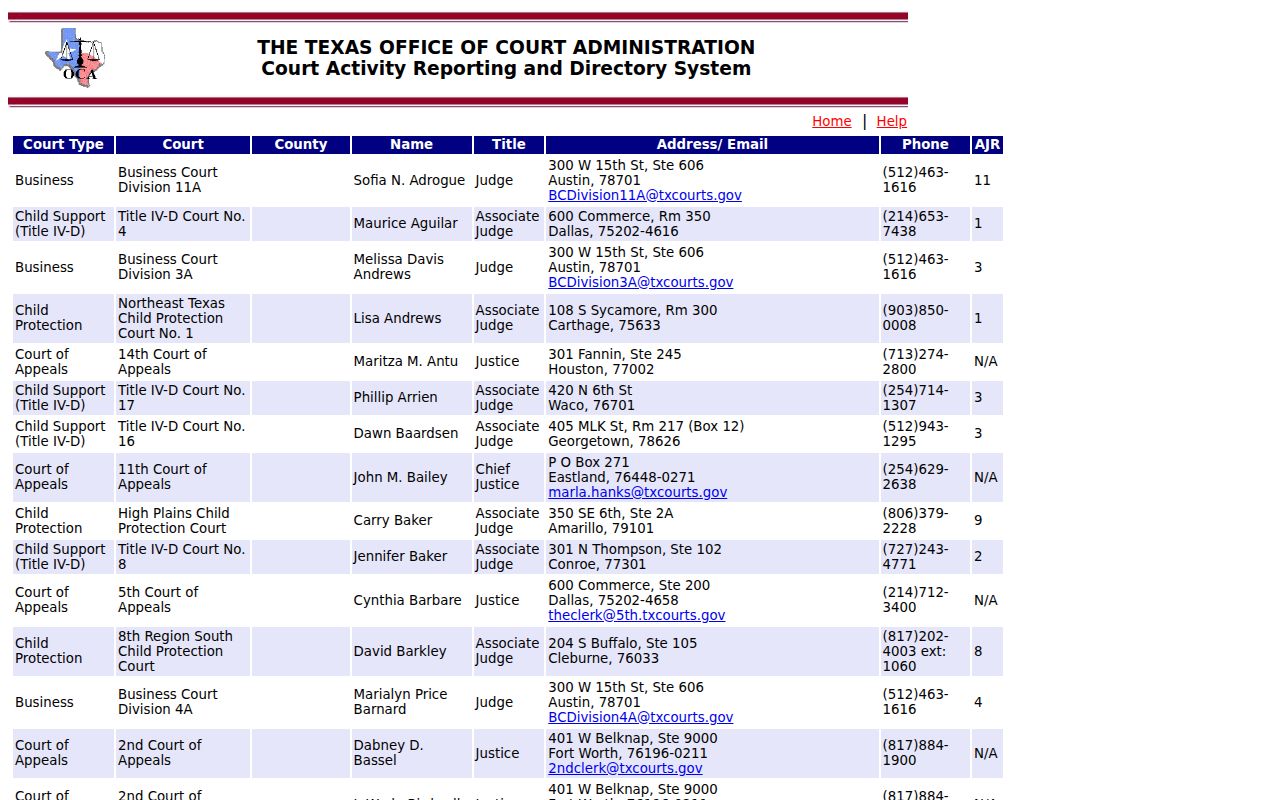
Use the directory to find the Hutchinson County court name, then ask that court's own clerk for warrant status.
Serving Arrest Warrants in Hutchinson County
In Hutchinson County, the sheriff, city police, constables, and other authorized peace officers can each execute process. HCSO's home page describes field deputies as handling warrants among several duties. The county publishes no assignment chart showing which agency serves each warrant type. Do not assume every city or court order routes through one unit. After an arrest comes booking and magistration, where the judge takes up the case and bond conditions. The 2025 county indigent-defense plan explains that post-arrest stage. It sets no public warrant surrender schedule and no universal bond amount, so those answers come from the court itself.
Hutchinson County Warrant Service Has Separate Roles
Issuance and service are different steps. A court or magistrate signs process; an authorized officer executes it. The Texas Courts trial-court overview describes district, county, JP, and municipal authority. The local map includes 84th and 316th District Courts, the constitutional County Court, two JPs, and three city courts.
The official court explanation provides the jurisdiction context used for Hutchinson County routing.
Texas trial-court jurisdiction overview

For a live case, call the issuing court; Hutchinson County posts no chart assigning warrants to serving agencies.
Comparing Arrest, Summons, and Bench Warrants
The three documents do different work. A summons directs a person to answer a case without authorizing immediate custody. An arrest warrant follows a probable-cause finding. A bench or FTA warrant ties to a missed appearance or another court obligation. Ask the issuing clerk which document was entered in Hutchinson County, because the remedy and the record holder both depend on that distinction.
| Feature | Arrest Warrant | Summons | Bench Warrant |
|---|---|---|---|
| What it does | Authorizes an arrest | Requires a court appearance | Responds to a missed court duty |
| Basis | Probable cause | Case-specific process | FTA or other noncompliance |
| Record route | Issuing court and serving officer | Court named on the summons | JP or municipal court in the case |
| Next step | Ask counsel and court about bond | Meet the date and instructions | Ask court about reset or recall |
Hutchinson County Arrest Warrant Records Access
Texas treats government records as open through the Public Information Act, though law-enforcement exceptions, sealed files, and juvenile matters can still block release. Hutchinson County's Clerk also states plainly that the office will not go hunting through unspecified public records on a requester's behalf. So a request works best when it names the case, the type of record, and the time period, and lands on the office that actually holds the file. Federal warrants sit outside Hutchinson County's lists altogether. Docket entries for the Northern District of Texas, Amarillo Division, come through PACER or a public terminal at the division. Sealed material and operational fugitive records may never show up in an ordinary docket search.
If There's an Arrest Warrant for You
Start by confirming which court issued the warrant and what the record shows right now. Ask about a bond, a voluntary appearance, or a motion to recall or quash. A lawyer can tell you which step fits. For a matter in a lower court, call that JP or municipal clerk in Hutchinson County. If it is a felony, the District Clerk handles the case route. After you act, ask the court how to confirm the action was recorded.
Important: Speak with an attorney before arranging a voluntary appearance; only the issuing court can confirm the warrant's current status and response options.
Hutchinson County Post-Arrest Magistration
Hutchinson County's 2025 indigent-defense plan calls for prompt magistration after an arrest. That is helpful context for what happens once custody begins. It does not set a pre-arrest surrender window, bond counter hours, or a fixed fee. The court sets those terms case by case, and a later court order may still be needed to address the underlying charge. Call the official court contact and ask counsel about the safest way to resolve the matter. An online name search, a payment screen, or a completed booking step does not prove the case itself is over.